
Sunny Storage · Clermont, Florida
Florida Self-Storage Market: 2026 Demand Overview
Florida is one of the most watched self-storage markets in the country, and for an obvious reason: storage demand follows people, moves and new homes, and Florida has had plenty of all three. But “Florida is growing” is not a business plan. This guide pulls together the latest primary public data, explains how each number relates to storage demand, and is honest about what public data cannot tell you.
All figures below come from the U.S. Census Bureau and were checked on the source pages on October 29, 2026.
Population: still growing, but slower
According to the Census Bureau’s Vintage 2025 estimates (released January 27, 2026), Florida had 23,462,518 residents on July 1, 2025. That makes it the third most populous state, behind California and Texas.
Between July 1, 2024 and July 1, 2025, Florida added 196,680 people, the second-largest numeric gain of any state after Texas. Measured from the April 1, 2020 estimates base, Florida’s population grew 8.9% through July 1, 2025.
For storage, population growth matters because every new household brings belongings, and many arrive through a move, a downsizing or a temporary gap between homes. Growth is a tailwind, not a guarantee.
The migration mix has changed
The same Census release shows a shift in where Florida’s growth comes from:
- Net international migration: 178,674 in 2025, the highest of any state.
- Net domestic migration: 22,517 in 2025, down sharply from 183,646 in 2023 and 310,892 in 2022. The Census Bureau notes that Florida, which has often ranked at or near the top for domestic migration, ranked 8th in 2025.
This matters for underwriting. A market model built on the 2021–2023 wave of domestic movers should be retested with current data. Different groups of new residents may have different housing patterns and storage needs, and those patterns vary by county.
Housing and construction activity
Storage demand tends to rise with housing turnover and new construction. Census QuickFacts reports for Florida:
- Housing units, July 1, 2025 (V2025): 10,789,047.
- Building permits, 2025: 178,297 (new privately owned housing units authorized).
- Living in the same house 1 year ago (ACS 2020–2024): 86.3% of residents age 1 and older, meaning the rest had moved within the year.
New permits point to future households. Mobility points to the moves that often trigger a storage rental. Neither measures storage demand directly, but both are inputs a feasibility study should look at for the specific trade area.
Age profile
In Florida, 22.8% of residents are 65 or older, according to QuickFacts (V2025). Older households are part of the downsizing and second-home story that many Florida storage operators describe. Treat this as context and test it locally, since age profiles vary widely between counties and even neighborhoods.
Zooming in: Central Florida and Lake County
State totals hide big local differences, which is why every serious analysis drops down to the county and trade-area level. Lake County, west of Orlando, is a good example of how local numbers can differ from the state picture. Census QuickFacts reports for Lake County:
- Population, July 1, 2025 (V2025): 456,068.
- Population change, April 1, 2020 to July 1, 2025: 18.8%, about twice Florida’s 8.9% over the same period.
- Housing units, July 1, 2025: 202,942.
- Building permits, 2025: 5,342.
- Residents 65 and older: 28.0%.
Faster growth than the state, active permitting and an older age profile together describe a county where both new households and downsizing can drive storage use. That is still only a first step. Supply, competition and access in the specific trade area decide whether a project works.
Site work matters too. Florida has five water management districts, and each handles water resources in its own region. Confirm which district covers your parcel before you plan stormwater permitting.
Demand drivers to watch in Florida
Population and permits are the headline numbers, but storage demand comes from specific life events. When you assess a Florida trade area, look for local evidence of each:
- Moves and relocations. People between homes, new arrivals waiting to buy, and households moving within the same metro all need short-term space. The ACS mobility figure above is a rough indicator, so check it at the county and city level.
- Downsizing and second homes. Residents moving from a house to a condo or apartment, and seasonal residents who keep belongings in Florida between visits, tend to rent for longer periods.
- New construction. New subdivisions bring households that may have smaller garages or HOA rules that limit outdoor storage. Local planning records show where homes are being approved.
- Small businesses. Contractors, online sellers and service businesses use storage for inventory, tools and records. County Business Patterns data from the Census Bureau can help size the local business base.
- Weather events. Hurricane season shapes how residents think about protecting belongings and documents. It also shapes how a facility should be designed and run.
None of these drivers is enough alone. A strong case usually shows several of them in the same trade area, backed by dated local data and a clear view of nearby supply.
Market data on this hub
This page is the overview for the market section of the hub. Upcoming market guides will go deeper into specific places and topics, each with its own dated sources. We will link them here as they are published.
What public data does not tell you
Federal statistics are free, dated and reliable, but they stop short of the numbers that decide a storage deal:
- Existing supply: how many facilities and how much rentable space already serve a trade area.
- Pipeline: what is planned, permitted or under construction nearby.
- Rents and lease-up: what facilities charge and how fast new ones fill.
Those figures mostly come from paid industry databases, broker research, or a local field survey of nearby facilities and planning records. Be careful with any article or pitch deck that quotes them without a dated source. Local planning and zoning records from the county and city are free and are often the best early signal of new supply.
How to use this data on a real site
- Define the trade area. Draw it around the site based on drive times and how people actually travel, not just county lines.
- Pull current Census data for the county and the nearest cities, and note the vintage of each estimate.
- Check housing signals: permits, new subdivisions and multifamily projects in local planning records.
- Map existing and planned facilities with a field survey and the city and county development records.
- Match product to climate and customers. In Florida’s heat and humidity, many developers weigh climate-controlled space heavily. Test the mix against local demand.
- Plan operations early. Software, access control and online rentals shape both the build and the customer experience. See our self-storage management software guide.
A real example in Lake County
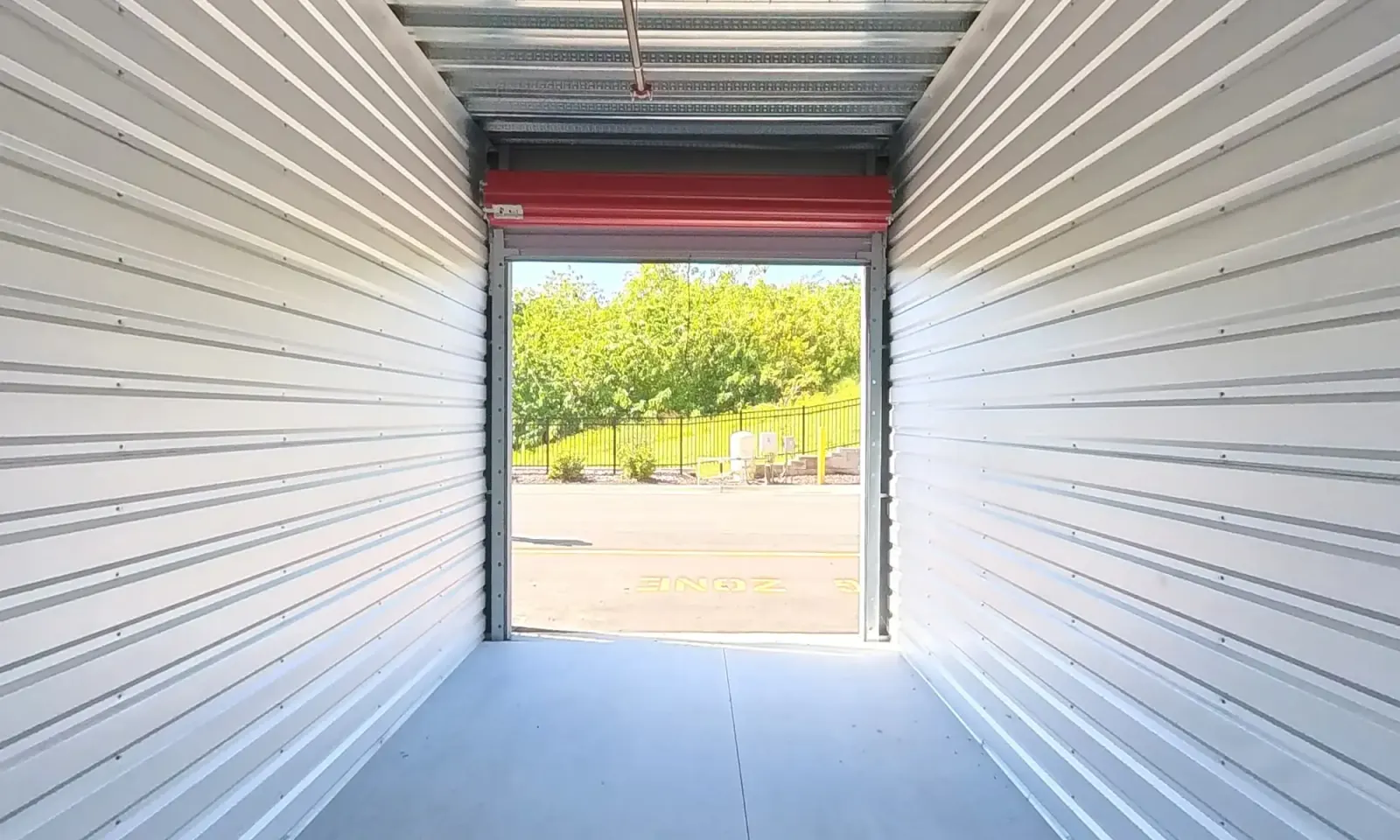
Sunny Storage at 1140 Hooks St, Clermont, FL is in Lake County. Designed and built by i4 Capital Group, owned and operated by Sunny Storage, an affiliated company. Unit sizes include 5x5 to 10x30. The indoor units are climate-controlled, and the 10x15, 10x20 and 10x30 sizes also come as ground-floor drive-up units. We mention it as a real example of a Central Florida facility, not as a source of market or performance figures. See the Sunny Storage hub for more, or the tenant-side guide to moving to Clermont.
Planning a new facility?
Email ofli@i4capital.com to talk about your site.
Sources
- U.S. Census Bureau, “U.S. Population Growth Slows Due to Historic Decline in Net International Migration,” January 27, 2026 (Vintage 2025) (accessed 2026-10-29)
- U.S. Census Bureau, QuickFacts: Florida (V2025; ACS 2020–2024; Building Permits 2025) (accessed 2026-10-29)
- U.S. Census Bureau, QuickFacts: Lake County, Florida (V2025; ACS 2020–2024; Building Permits 2025) (accessed 2026-10-29)
- U.S. Census Bureau, State Population Totals and Components of Change: 2020–2025 (accessed 2026-10-29)
- Florida Department of Environmental Protection, Water Management Districts (accessed 2026-10-29)
Frequently asked questions
- Is Florida still growing fast enough to support new self-storage?
- Florida is still growing, but more slowly. The U.S. Census Bureau's Vintage 2025 estimates show Florida added 196,680 residents between July 1, 2024 and July 1, 2025, the second-largest numeric gain of any state. Demand for a specific project depends on its trade area, not the state total.
- Where does Florida's population growth come from now?
- In the Vintage 2025 estimates, most of Florida's growth came from net international migration (178,674), while net domestic migration fell to 22,517, down sharply from 2022 and 2023, according to the Census Bureau.
- Is there free public data on self-storage supply in Florida?
- Not at the level a feasibility study needs. Federal statistics cover population, housing and permits, but facility counts, facility size and pipeline data mostly come from paid industry databases or a local field survey.
- How should I size up a specific Florida market?
- Begin with the trade area around the site: county and city Census data, housing and permit trends, local planning documents, and a survey of existing and planned facilities nearby. Then test unit mix, including climate-controlled space, against that demand.
Related
i4 Capital Group · design-build
or email ofli@i4capital.com