
Sunny Storage · Clermont, Florida
Online Rentals and Reservations in Self-Storage (2026)
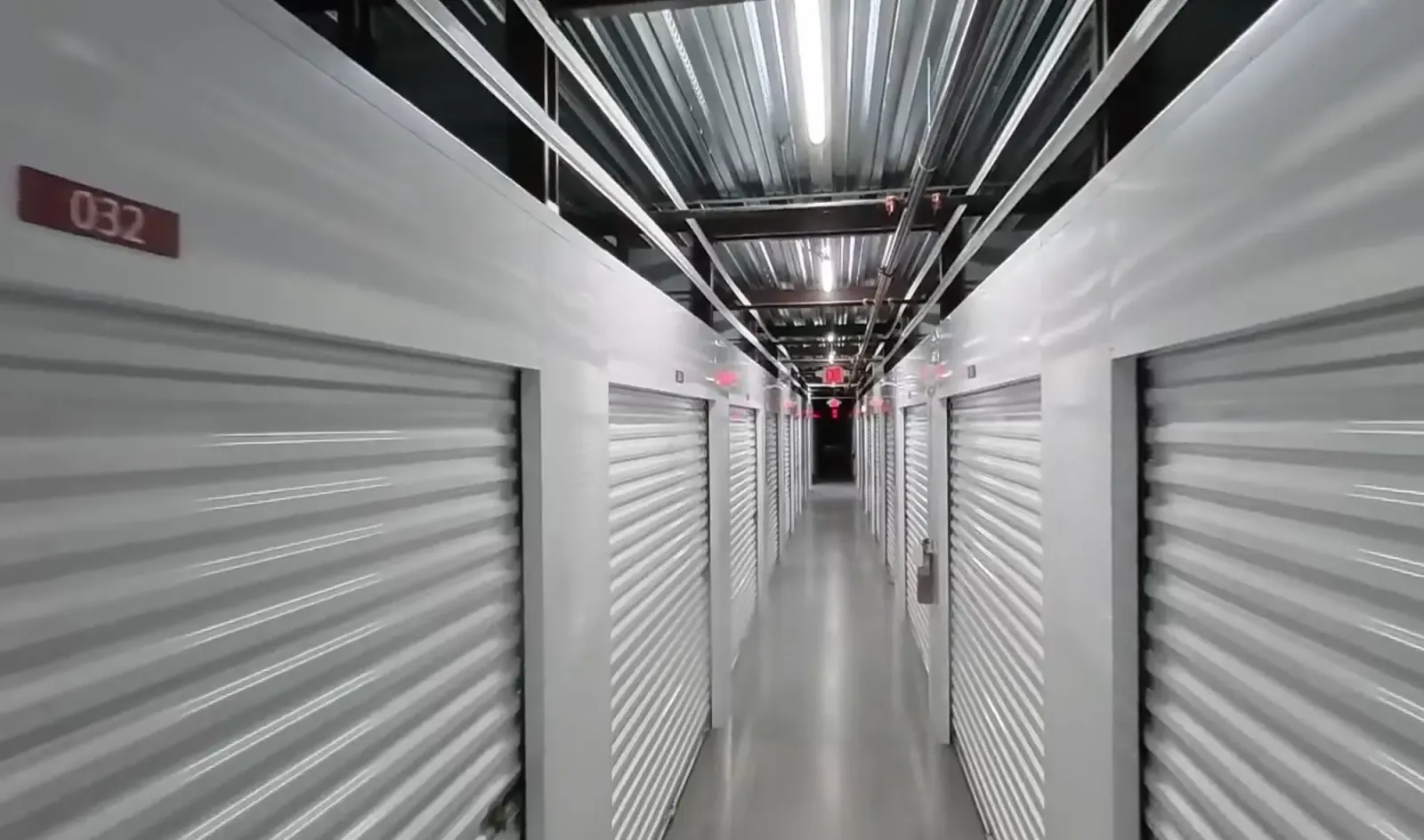
A growing share of self-storage customers never set foot in the office before move-in day. They compare sizes on a phone, pick a unit, sign the rental agreement and get a gate code in one sitting. For an operator, that convenience depends on a chain of decisions that starts long before the website goes live: how inventory is modeled in the management software, what the lease says, how payments are taken, and how the gate learns that a new tenant exists.
This guide explains how online reservations and online rentals work from the operator’s side, what the largest public operators disclose about them, and what Florida law asks of the lease behind the screen. Sunny Storage at 1140 Hooks St, Clermont, FL takes reservations online at sunnystorage.com. Designed and built by i4 Capital Group, owned and operated by Sunny Storage, an affiliated company. We mention it only so you know the facility behind this hub, not as a claim about any result.
Not legal advice. The Florida sections below summarize the 2026 Florida Statutes. Laws change. Check the current law and have a Florida attorney review your lease, e-sign consent and notices before you act.
Reserve online vs rent online
The two terms are often used as if they meant the same thing. They don’t, and your website should make the difference obvious to the customer.
- Online reservation. The customer holds a unit, or a unit size, for a future date. No rental agreement is signed yet. The lease, payment and access setup happen later, either at the office or through a follow-up link.
- Online rental (online move-in). The customer completes the whole transaction remotely: chooses a unit, enters tenant details, signs the rental agreement electronically, pays, and receives access instructions. On move-in day they can drive straight to the unit.
Public Storage describes this second model in its annual report for fiscal year 2025. Its eRental® process lets prospective tenants, “including those who initially reserved a space,” execute the rental agreement from a smartphone or computer “and then go directly to their space on the move-in date.” The same filing says “nearly three quarters” of its new rental agreements in 2025 were completed through eRental® and Rent by Phone. That is one large operator’s disclosure, not an industry average, but it shows where the largest players have moved.
Most facilities offer both paths. A reservation suits a customer who is still deciding or moving weeks from now; an online rental suits someone who needs the unit today.
What the large public operators disclose
The annual reports (Form 10-K) of public self-storage companies are one of the few free, audited sources on how the industry sells units. Three filings for fiscal year 2025, filed with the SEC in February 2026, are useful here:
- Public Storage lists its website, its customer care center, and its properties as marketing channels, alongside a smartphone app. It says the website is “a key source of customers,” and that many customers who reserved by phone or walked in had first “reviewed our pricing and availability online.” It adds that the app gives tenants “digital access to our properties, as well as payment and other account management functions.”
- CubeSmart states that “all of our stores have a storage associate on-site or virtually to assist our customers,” and mentions “paper reduction through our electronic rental platform.”
- Extra Space Storage describes its tenant leases as “generally on month-to-month terms” that “include automatic monthly renewals,” and says its technology systems provide “real-time, interactive rental rate and discount management.”
The pattern is consistent: online rental sits on top of a live inventory and pricing system, with a human channel kept alongside it.
What tenants expect from the process
There is no free, primary source that measures how many self-storage customers in Florida rent online, so we won’t guess. Two federal and survey sources describe the wider habits your customers bring with them:
- In the Pew Research Center’s 2026 survey (fact sheet dated October 19, 2026), 91% of U.S. adults say they own a smartphone.
- The U.S. Census Bureau estimated that e-commerce made up 17.1% of total U.S. retail sales in the second quarter of 2026 (seasonally adjusted, released August 18, 2026). That figure covers retail goods, not storage rentals; it is context, not a storage statistic.
In practice, a mobile-first renter expects to see real sizes and current availability, understand every fee before paying, sign on the phone, and know exactly how to get through the gate.
The online rental flow, step by step
Every platform labels the steps differently, but an online move-in usually runs through the same sequence. Vendor documentation describes the building blocks: Storable, for example, says its websites let tenants “reserve, manage, and move-in to storage units online,” and that its automation tools support “online reservations, digital leases, identity verification, and instant move-ins,” with gate access granted or revoked “based on tenant status.”
1. Unit selection from live inventory
The website must read availability and current rates straight from your management software. If the two drift apart, customers rent units that are not really free. Model every unit type you sell (for example climate-controlled interior units and drive-up units) with its own size, features and rate, so the customer picks the right product. Our storage unit size guide shows the tenant-side view of the same choice.
2. Tenant details and identity
Collect what your lease and lien process will rely on later. In Florida, the “last known address” used for notices is the street or post office box address the tenant gave in the latest rental agreement or in a later written change-of-address notice, which the statute allows by hand delivery, first-class mail or e-mail (s. 83.803(1)). Lien notices may go by e-mail, but if an e-mailed notice of a pending sale gets no response, receipt or delivery confirmation, the owner must also send it by first-class mail with a certificate of mailing before the sale (s. 83.806(1)). So capture both a verified e-mail address and a full mailing address at move-in. Many operators add identity verification at this step; decide what your process requires and apply it the same way online and at the counter.
3. The rental agreement and Florida terms
The online lease must say the same thing as your paper lease. Under the 2026 Florida Statutes:
- The rental agreement or the application for it “must contain a provision disclosing whether the applicant is a member of the uniformed services” (s. 83.808(2)). Make it a required field, not an optional checkbox buried in the terms.
- The amount of any late fee and the conditions for charging it “must be stated in the rental agreement or in an addendum” (s. 83.808(3)). Show it before the customer signs.
- If you will ever need to enforce a lien, the notice must describe the stored property the same way, or in a reasonably similar way, “as provided in the rental agreement” (s. 83.806(2)(b)). Your online form needs a field for that description.
For the full delinquency process, see our Florida self-storage lien law guide.
4. Electronic signature and consent
Florida’s Uniform Electronic Transaction Act (s. 668.50) says a record, signature or contract may not be denied legal effect “solely because” it is electronic, and that “an electronic signature satisfies” a legal requirement for a signature. It applies only to transactions where both parties “agreed to conduct transactions by electronic means,” and information that must be given in writing counts as delivered electronically only if it is in a record “capable of retention by the recipient.”
The federal ESIGN Act (15 U.S.C. 7001(c)) adds consumer-disclosure rules where a law requires information to be given to a consumer in writing: before consenting to electronic records, the consumer must receive a “clear and conspicuous statement” covering, among other things, the right to paper copies and how to withdraw consent. In practice:
- Ask for consent to electronic records and signatures as its own step, with plain wording.
- Tell the tenant how to get a paper copy and how to update their e-mail address.
- E-mail a copy of the signed lease that the tenant can save, and keep your own copy with a time stamp.
5. Payment
Taking a card online puts you inside the Payment Card Industry Data Security Standard. The PCI Security Standards Council says PCI DSS applies to entities that “store, process, or transmit cardholder data,” including merchants. Most operators use the processor built into their management software so card data never touches their own servers; confirm in writing who is responsible for which PCI requirements.
If you accept bank (ACH) payments online, Nacha’s WEB debit rule, effective March 19, 2021, makes account validation an explicit part of the “commercially reasonable fraudulent transaction detection system” required for the first use of an account number or a change to it. Your processor usually handles this, but ask.
Offer autopay enrollment at this step and say clearly when the first and recurring charges will run.
6. Tenant protection or insurance
If you require proof of coverage or sell a protection plan, present it as a clear choice during checkout, with the terms linked. Do not pre-select a paid option without making the choice obvious.
7. Access
The move-in is not finished until the customer can open the gate. The access control system should receive the new tenant from the management software automatically and issue a code, or let the tenant choose one, and should revoke or restrict access based on account status later on. Send move-in instructions with the code: hours, which gate to use, where the unit is, and who to call. Sunny Storage, for example, lists its phone number, (786) 475-1690, for questions.
8. Confirmation and records
Close the flow with a confirmation that states the unit, the rate, the first charge, the signed documents and the access steps. Store everything in the tenant record, since the same data will drive billing, notices and, if it ever comes to it, the lien process.
Reservation policies to decide up front
Reservations look simple, but they need rules your staff and your website apply the same way:
- Hold period. How long a reservation holds a unit, and what happens when it expires.
- Unit vs size. Whether you hold a specific unit or any unit of that size and type.
- Deposit. Whether you take one and under what conditions it is refunded. Write it down and show it before the customer submits.
- Rate. Whether the rate shown at reservation is the rate at move-in.
- Follow-up. Who contacts the customer before move-in, and how the reservation converts into a signed lease (at the counter or through an online link).
Keep a human path
Online rentals reduce routine work at the counter, but they do not remove the need for people. Public Storage’s 2025 annual report says it gives customers the option of a live agent, “despite the higher marginal cost relative to a reservation made on our website,” because it believes this helps close sales and results in “greater satisfaction.” CubeSmart describes associates available on-site or virtually at every store. For a single facility, the equivalent is a phone number and e-mail that are answered, shown on every step of the online flow.
Accessibility and data security
Accessibility. The U.S. Department of Justice’s guidance on web accessibility (March 18, 2022) says the ADA applies to businesses open to the public and that they must take steps to make their websites accessible to people with disabilities. Test the whole rental flow, including the e-sign step, with a keyboard and a screen reader, not only the home page.
Data security. An online rental collects names, addresses, contact details and payment data. Florida’s Information Protection Act (s. 501.171) requires covered entities to “take reasonable measures to protect and secure data in electronic form containing personal information,” and generally requires notice to affected individuals no later than 30 days after a breach is determined. Limit who can export tenant data, use the vendor’s security features, and agree with your vendors in writing how a breach would be handled.
Why it starts during design
Online rentals change the building as well as the website. An operator who wants a customer to sign at 9 p.m. and drive in the next morning needs:
- Gate keypads and door hardware compatible with the access system the management software talks to.
- Reliable network and power to the gate, keypads, cameras and any self-serve kiosk.
- Clear wayfinding signs and unit numbering, so a first-time tenant can find the unit without help.
- Lighting and camera coverage on the routes a tenant will walk alone.
- An office layout that fits the staffing model you actually plan to run.
On design-build projects, we recommend choosing the management software and access vendor before construction documents are final, so the cabling and hardware match the online process from day one. Our self-storage management software comparison covers which platforms support online rentals, gate integration and e-leases.
Online rental checklist for operators
- Website reads live availability and rates from the management software.
- Each unit type is modeled separately, with size, features and rate.
- Reservation rules (hold period, unit vs size, deposit, rate) are written and shown.
- Tenant form captures a verified e-mail, a full mailing address and the uniformed services disclosure.
- Late fees and their conditions appear in the online lease before signing.
- Stored property description is captured in the rental agreement.
- E-sign consent is a separate step; tenants can get a paper copy and update contact details.
- Signed documents are e-mailed to the tenant and stored with a time stamp.
- Card payments run through a PCI-compliant processor; ACH has account validation.
- Protection or insurance choice is clear and not pre-selected.
- Gate access is created automatically and tied to account status.
- Move-in instructions include hours, gate, unit location and a phone number.
- The flow passes a keyboard and screen-reader test.
- Data access is limited and a breach response is agreed with vendors.
- A live phone or e-mail path is visible at every step.
For the facility behind this hub, visit the Sunny Storage hub.
Planning a similar project?
Email ofli@i4capital.com to talk about a facility designed for online rentals from the start, or see our design-build services.
Sources
- Public Storage, Form 10-K for fiscal year 2025, filed 2026-02-12 (SEC EDGAR) (accessed 2026-11-02)
- CubeSmart, Form 10-K for fiscal year 2025, filed 2026-02-27 (SEC EDGAR) (accessed 2026-11-02)
- Extra Space Storage Inc., Form 10-K for fiscal year 2025, filed 2026-02-20 (SEC EDGAR) (accessed 2026-11-02)
- The Florida Senate, 2026 Florida Statutes, s. 83.803, Definitions (accessed 2026-11-02)
- The Florida Senate, 2026 Florida Statutes, s. 83.806, Enforcement of lien (accessed 2026-11-02)
- The Florida Senate, 2026 Florida Statutes, s. 83.808, Contracts (accessed 2026-11-02)
- The Florida Senate, 2026 Florida Statutes, s. 668.50, Uniform Electronic Transaction Act (accessed 2026-11-02)
- The Florida Senate, 2026 Florida Statutes, s. 501.171, Security of confidential personal information (accessed 2026-11-02)
- 15 U.S.C. 7001, Electronic Signatures in Global and National Commerce Act (Cornell LII) (accessed 2026-11-02)
- U.S. Department of Justice, Guidance on Web Accessibility and the ADA, March 18, 2022 (accessed 2026-11-02)
- PCI Security Standards Council, PCI DSS overview (accessed 2026-11-02)
- Nacha, Supplementing Fraud Detection Standards for WEB Debits, effective March 19, 2021 (accessed 2026-11-02)
- Pew Research Center, Americans’ Use of Mobile Devices in 2026, fact sheet, October 19, 2026 (accessed 2026-11-02)
- U.S. Census Bureau, Quarterly Retail E-Commerce Sales, 2nd Quarter 2026, released August 18, 2026 (accessed 2026-11-02)
- Storable, Self-Storage Website Software (accessed 2026-11-02)
- Storable, Storage Facility Automation (accessed 2026-11-02)
Not legal advice. Check current law before acting.
Frequently asked questions
- What is the difference between a storage reservation and an online rental?
- A reservation holds a unit or unit size for a future date, and no lease is signed yet. An online rental, often called an online move-in, finishes the whole transaction: the tenant signs the rental agreement, pays, and receives access instructions without visiting the office.
- Is an e-signed self-storage lease valid in Florida?
- Florida's Uniform Electronic Transaction Act, section 668.50 of the Florida Statutes, says a signature or contract may not be denied legal effect solely because it is electronic, and that an electronic signature satisfies a legal requirement for a signature. It applies when both parties have agreed to do business electronically. This is not legal advice; have a Florida attorney review your lease and e-sign process.
- What must a Florida self-storage rental agreement include?
- Under the 2026 Florida Statutes, the rental agreement or application must disclose whether the applicant is a member of the uniformed services (s. 83.808(2)), and any late fee and the conditions for charging it must be stated in the agreement or an addendum (s. 83.808(3)). Your online form has to collect and display the same terms as your paper lease.
- Do online rentals mean a facility can run without staff?
- Not necessarily. Many operators keep a phone or chat path next to the online flow. Public Storage, for example, says in its 2025 annual report that it gives customers the option to talk to a live agent because it believes this helps close sales and raises satisfaction.
Related
i4 Capital Group · design-build
or email ofli@i4capital.com